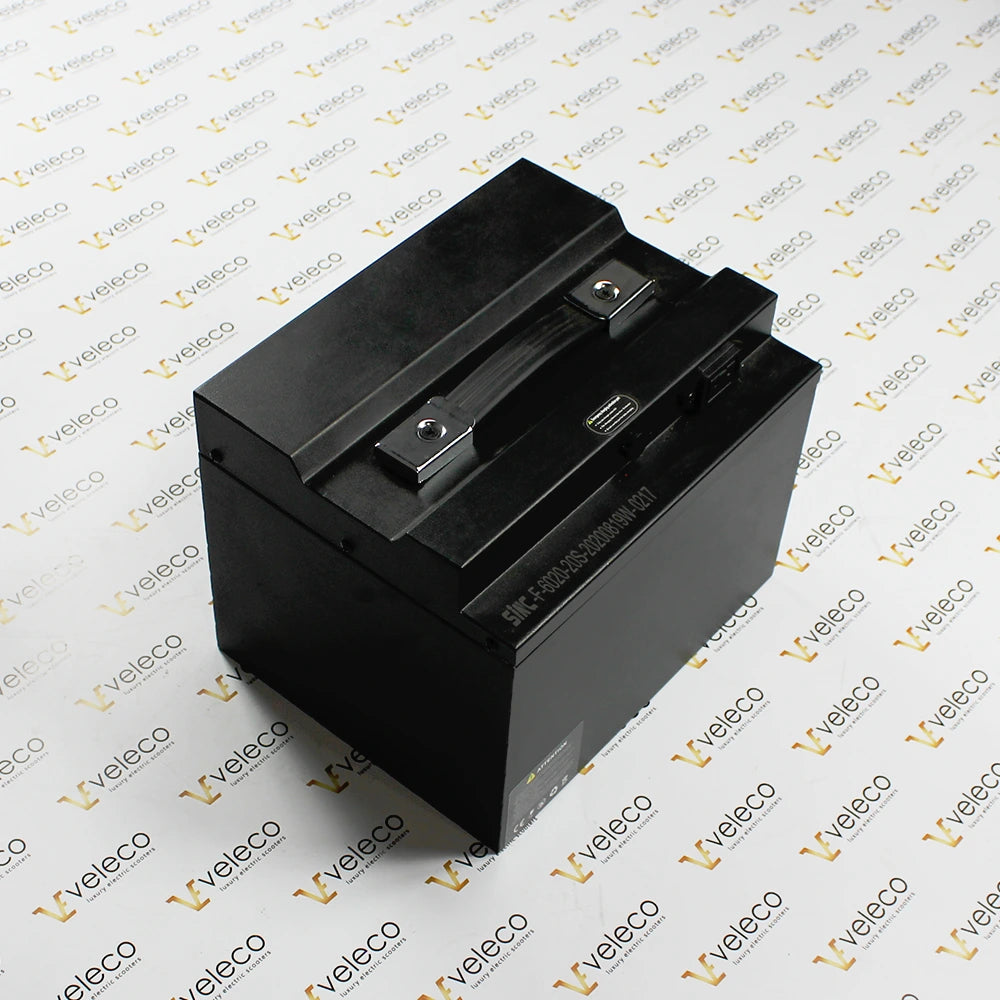



Lithium-ion batteries are made up of several individual cells. Thanks to their special structure and materials, they offer high performance and their capacity remains constant over long periods of operation. They can also be partially charged at any time, allowing them to be used for multiple shifts. Discover in our guide how lithium-ion batteries are produced, what metals they contain, and how they work.
Small but powerful: components of lithium batteries
A lithium-ion battery is made up of many individual cells that feature always the same structure and contain the following components:
- Positive electrode : The cathode of a lithium battery is made of lithium metal oxide, which may contain varying amounts of nickel, manganese, and cobalt. Metal oxides are also known as transition metals.
- Negative electrode : the anode is usually made of graphite.
- Electrolyte : so that the lithium ions move as charge carriers The cell also contains an anhydrous electrolyte. Here, salts such as lithium hexafluorophosphate are dissolved in an aprotic solvent such as diethyl carbonate. In lithium polymer batteries, a polyvinylidene fluoride polymer or polyvinylidene fluoride hexafluoropropene is used at this point.
- Separator : To prevent short circuits, a separator made of non-woven materials or polymer films is installed between the electrodes. The separator is permeable to lithium ions and can absorb them in large quantities.
The separator: safe operation of lithium batteries
The separator integrated into lithium-ion batteries controls and ensures the electrochemical reactions within them. On one hand, it isolates the two electrodes from each other. to prevent internal short circuits . Furthermore, its permeable design ensures that only lithium ions can pass through and, therefore, move between the negative and positive electrodes. Likewise, the separator guarantees the gas exchange in the closed cells of these batteries.
To achieve this, the component must be made of microporous membranes, which can vary depending on the battery's power and size. For this purpose, polymer films (as in lithium-polymer batteries) or heat-resistant ceramic separators are used. The combination of non-woven fabrics with a ceramic coating makes the separators particularly flexible while also being resistant to temperatures up to 700°C.
Battery management system: function optimization
If several cells are combined to form a module, it usually contains an integrated control system. The most important electrical component is the The battery management system (BMS) consists of several parts: the OBS ( one board sense ) and the SCU ( stack control unit ), located in the module, and the BCU ( battery control unit ), which combines all the information from the individual modules. Together, the BMS acts as an interface between the device and the battery. It optimizes the battery's capacity, power, and performance, and prevents deep discharge even when the lithium battery remains stored for a long period of time and, therefore, prolongs its useful life.
A construction using high-value metals
The name given to these batteries comes, in part, from their unique design, which allows lithium to move back and forth between the electrodes in ionized form. Depending on the materials used for the electrodes, Lithium-ion batteries are divided into different groups . The operating principle remains the same, but energy density, cell voltage, temperature sensitivity, capacity, and permissible charge and discharge currents can vary due to the use of different transition metal ions. Lithium batteries can be constructed as follows:
- Lithium polymer batteries : the electrolyte used is a polymer-based film with a gel-like consistency. This structure allows for the manufacture of batteries with a particularly small size (less than 0.1 mm thick) and various designs. With an energy density of up to 180 Wh/kg, they are very powerful, but mechanically, electrically, and thermally sensitive.
- Lithium cobalt dioxide batteries : the positive electrode of this type of battery is made of lithium cobalt dioxide; the anode is made of graphite. These batteries are prone to thermal runaway when overcharged.
- Lithium titanate batteries : In this case, the negative electrodes are not made of graphite, but of sintered titanium spinel. This allows for rapid charging and operation at temperatures as low as -40°C. The positive electrodes are also made of lithium titanium oxide.
- Lithium iron phosphate batteries : The cells in this type of battery have a lithium iron phosphate cathode. Furthermore, the electrolyte is in solid form. These batteries have a lower energy density (up to 110 Wh/kg) but, in the event of mechanical damage, they are not prone to thermal runaway. The discharge voltage curve indicates that these batteries exhibit a memory effect, although this is very low compared to NiCd batteries.
How lithium batteries work: charging and discharging
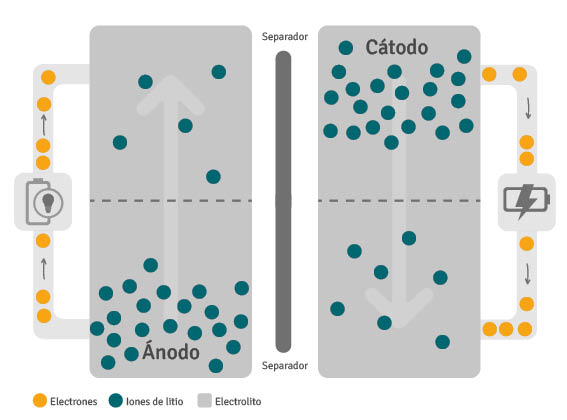
The operation of lithium batteries follows a simple principle: Electrical energy is stored through a chemical process and it is used to power collection devices such as, for example, the Electric stackers . This is largely based on the constant movement of ionized lithium between the electrodes. The flow of lithium ions balances the flow of external current when charging and discharging the batteries, so that the electrodes themselves remain electrically neutral.
1. Download
If the battery is discharged, that is, if a terminal device consumes the stored energy, The lithium atoms in the negative electrode each emit one electron . This electron is returned to the positive electrode through the external circuit. In the same step, the same number of lithium ions move from the negative electrode through the electrolyte and the separator to the positive electrode. There, the electrons are collected by highly ionized transition metal ions, which can vary depending on the battery type and, unlike lithium ions, are immobile.
2. Load
When charging the accumulator batteries, Unionized lithium atoms migrate from the positive electrode to the negative electrode through the separator , intertwining with graphite molecules. This process, also known as intercalation, is triggered by charging with a constant current until the nominal current is reached. Once the end-of-charge voltage is reached, it is maintained while the charging current decreases. To prevent cell damage or overheating (thermal protection), most lithium-ion batteries are equipped with electronic charging or protection circuits. These circuits are tailored to the specific cell design and ensure that neither overcharging nor deep discharging occurs.